How to Follow God’s Laws: A Nazarene Guide
Introduction and Brief Summary:
Following God’s laws, as revealed in the Torah, is at the core of biblical Nazarene Judaism. These commandments were not abolished by Yeshua the Messiah, but rather affirmed, taught, and lived by Him and His early disciples. This page offers guidance on how modern believers can return to the ancient path by walking in obedience to God’s laws.
1. Understand the Foundation: Torah is for All Believers
- The Torah (Genesis to Deuteronomy) is God’s instruction manual for life, given through Moses at Sinai.
- Psalm 119:142 “Your righteousness is an everlasting righteousness, and Your Torah is truth.”
- Yeshua’s teaching confirms the Torah: “Do not think that I came to abolish the Torah or the Prophets. I did not come to abolish but to fulfill.” (Matthew 5:17)
- All who join Israel, whether native-born or sojourner, are expected to follow the same laws (Numbers 15:15-16).
2. Begin with the Basics: The Ten Commandments
These form the core of righteous living (Exodus 20):
- No other gods
- No idols
- Do not take God’s Name in vain
- Remember the Sabbath
- Honor father and mother
- Do not murder
- Do not commit adultery
- Do not steal
- Do not bear false witness
- Do not covet
3. Observe the Weekly Sabbath
- When: From
Fridaythe 6th day sunset toSaturdaythe 7th day sunset. (Friday and Saturn Day are pagan names) - What to do: Rest from work, gather for worship and study, delight in God’s creation and Word (Isaiah 58:13-14).
- Yeshua and the apostles all kept the Sabbath faithfully (Luke 4:16, Acts 17:2).
4. Keep the Biblical Feasts
God appointed seven annual moedim (appointed times) in Leviticus 23:
- Passover (Pesach)
- Unleavened Bread (Chag HaMatzot)
- First Fruits (Yom HaBikkurim)
- Shavuot (Pentecost)
- Yom Teruah (Trumpets)
- Yom Kippur (Day of Atonement)
- Sukkot (Tabernacles)
These feasts are prophetic, historical, and ongoing reminders of God’s plan. They are not “Jewish holidays” but YHWH’s Feasts (Leviticus 23:2).
Learn how to travel to Jerusalem Israel https://www.travelingisrael.com/
ETA-IL https://israel-entry.piba.gov.il/
Israeli Embassies https://new.embassies.gov.il/newyork/en/services
Phone Service http://simtoisrael.com/
http://www.campephraim.org/
5. Eat Biblically Kosher
- Avoid unclean animals as outlined in Leviticus 11 and Deuteronomy 14 (e.g., pork, shellfish, scavengers).
- Eating clean is a matter of holiness and obedience, not salvation by works.
6. Study and Apply the Commandments
- Daily Torah reading builds wisdom (Deuteronomy 6:6-9).
- Wear tzitzit (fringes) as a reminder to obey (Numbers 15:38-40).
- Wear Teffilin Deuteronomy 6
- Circumcise sons on the eighth day (Genesis 17:12).
- Practice justice, mercy, and humility (Micah 6:8).
7. Avoid Pagan Customs and Traditions
- Reject man-made holidays like Christmas, Easter, and Halloween.
- Do not mix the holy with the profane (Ezekiel 22:26).
- True worship is defined by God, not culture or convenience (Deuteronomy 12:30-32).
8. Join a Torah-Observant Community
- Fellowship with others who keep the commandments and testify of Yeshua (Revelation 14:12).
- Isolation leads to error; accountability and shared wisdom are vital.
9. Repent and Continually Grow
- Torah observance is not about perfection but direction.
- When we sin, we repent and return to obedience (1 John 3:4, Proverbs 28:13).
10. Remember: Yeshua is the Living Torah
- He is the Word made flesh (John 1:14).
- Following God’s laws is following in the footsteps of the Messiah.
“Here is the patience of the saints: those who keep the commandments of God and the faith of Yeshua.” (Revelation 14:12)
Obedience is not bondage. It is freedom to walk in the ways of righteousness.
Want to learn more? Explore our studies on the Sabbath, Feasts, and Torah Application at BibleCourts.com.
The benefits of keeping the Torah, holy days, Shabbat, eating kosher, and avoiding pagan customs are both spiritual and practical, rooted in Scripture and confirmed through experience. Here’s a full biblical and theological breakdown:
Attribution: The ELECTRONIC copy of JPS is copyright to, Mr. Larry Nelson, Box 2083, Rialto, CA 92376. Usually quoted in English next to the hebrew text.
Scripture taken from the New King James Version®. Copyright © 1982 by Thomas Nelson. Used by permission. All rights reserved.
“Scripture quotations are from The ESV® Bible (The Holy Bible, English Standard Version®), © 2001 by Crossway, a publishing ministry of Good News Publishers. Used by permission. All rights reserved.”
“Scripture quotations taken from the (NASB®) New American Standard Bible®, Copyright © 1960, 1971, 1977, 1995, 2020 by The Lockman Foundation. Used by permission. All rights reserved. lockman.org”
1. Spiritual Benefits of Keeping Torah
✅ A. Obedience to God’s Will
-
Deuteronomy 10:12-13 – God commands Israel to walk in His ways, love Him, and keep His commandments for our good.
-
Psalm 119:1 – “Blessed are those whose way is blameless, who walk in the law (Torah) of YHWH.”
Keeping Torah aligns your life with God’s covenant and truth, showing love and loyalty to Him (John 14:15: “If you love Me, keep My commandments”).
✅ B. Holiness and Sanctification
-
Leviticus 20:26 – “Be holy, for I, YHWH, am holy, and I have set you apart from the peoples.”
-
John 17:17 – “Sanctify them in the truth; Your word is truth.”
Torah observance sets believers apart from the world, sanctifying them through God’s Word.
✅ C. Protection from Sin and Deception
-
Psalm 119:11 – “I have stored up Your word in my heart, that I might not sin against You.”
-
1 John 3:4 – Sin is defined as “transgression of the Torah.”
Torah teaches what sin is and protects believers from spiritual deception.
✅ D. Deeper Fellowship with God and Messiah
-
1 John 2:3-6 – We know we know Him if we keep His commandments.
- When you keep the torah, it causes a greater intimacy, closeness, favor, blessing, and presence of Hashem in your life.
- People are seeking a greater infilling of the ruack hakodesh, the spirit of holiness Ephesians 4:30. When you transgress the torah you grieve the ruack hakodesh, and his presence may depart from you Psalm 51:11, as Revelation 2:5 talks about hashem removing his candlestick or manorah from you if you do not repent. When you keep Torah, Hashem is pleased with you, and he and his ruack hakodesh will abide with you and in you, especially in a more intimate way. The more you learn and do torah, the closer and more intimate you will be with Hashem!
-
Luke 4:16 – Yeshua kept Shabbat and taught Torah in the synagogue.
By keeping the same instructions Yeshua kept, we walk as He walked (1 John 2:6).
️ 2. Benefits of Keeping the Holy Days (Mo’edim)
✅ A. God’s Calendar and Prophetic Insight
-
Leviticus 23 – These are “appointed times of YHWH,” not “Jewish holidays.”
-
Each holy day points to past and future redemptive events (e.g., Passover = crucifixion, Shavuot = Spirit poured out, Fall Feasts = second coming).
Keeping the Mo’edim connects believers to the prophetic rhythm of God’s plan for Israel and the nations.
✅ B. Deeper Understanding of the Gospel
-
Colossians 2:16-17 – These holy days are shadows of things to come, with Messiah as their substance.
Observing them helps believers better understand Yeshua’s mission, timeline, and future return.
✅ C. Unity with Israel and the Body
-
The feasts bring people together across languages and cultures in obedience to one God.
Believers who keep them demonstrate their citizenship in the Commonwealth of Israel (Ephesians 2:12).
Find out how easy can be to visit Jerusalem Israel for the feasts: http://www.campephraim.org/
️ 3. Benefits of Eating Kosher (Biblical Clean Foods)
✅ A. Obedience to Leviticus 11 & Deuteronomy 14
-
“Be holy, for I am holy” is repeated in the context of clean and unclean foods (Lev. 11:44–47).
-
God created animals with specific purposes; unclean animals are biological waste processors (not food).
Kosher eating is a direct expression of holiness and bodily obedience.
✅ B. Health & Purity
-
Clean foods are safer, cleaner, and avoid parasites and toxins commonly found in pork and shellfish.
-
Many studies confirm health benefits associated with Torah-based dietary guidelines.
God’s laws were not only moral but physically wise for human well-being.
Torah List of Biblically Clean and Unclean Foods
Based on Leviticus 11 and Deuteronomy 14 (Masoretic Text)

https://www.youtube.com/watch?v=rdyOu6Bdku8

1. Land Animals
Clean: Must have BOTH:
-
Split hooves
-
Chew the cud (ruminate)
| Hebrew Word | English Translation | Clean? | Reference |
|---|---|---|---|
| מַעֲלֵה גֵרָה (ma’aleh gerah) | “chews the cud” | ✔️ Yes | Lev 11:3; Deut 14:6 |
| מַפְרֶסֶת פַּרְסָה (mafreṣet parsah) | “divides the hoof” | ✔️ Yes | Lev 11:3; Deut 14:6 |
| גָּמָל (gamal) | Camel (chews cud, no split hoof) | ❌ No | Lev 11:4 |
| שָּׁפָן (shafan) | Hyrax or rock badger | ❌ No | Lev 11:5 |
| אַרְנֶבֶת (arnevet) | Rabbit | ❌ No | Lev 11:6 |
| חֲזִיר (chazir) | Pig (split hoof, no cud) | ❌ No | Lev 11:7; Deut 14:8 |
Here’s a health-focused summary on common food risks associated with non‑kosher items—particularly shellfish and pork:
1. DO NOT EAT Shellfish (e.g. crab, lobster, shrimp)
-
Prevalence: Up to 2 % of U.S. adults suffer from shellfish allergies; among adults, it’s one of the most common food allergies pubmed.ncbi.nlm.nih.gov+10thesun.co.uk+10pmc.ncbi.nlm.nih.gov+10.
-
Types & Severity: Includes allergies to crustaceans (crab, shrimp, lobster) and mollusks (oysters, clams). Reactions range from hives and nausea to fatal anaphylaxis, with crustaceans causing the majority of severe cases verywellhealth.com+3foodallergy.org+3mayoclinic.org+3.
-
Symptoms: Hives, itching, swelling, wheezing, stomach issues, dizziness, and potentially airway constriction requiring emergency epinephrine mayoclinic.org.
-
Cross‑contamination: Shellfish proteins can contaminate surfaces and shared cooking utensils, so strict kitchen hygiene is essential webmd.com+15acaai.org+15verywellhealth.com+15.
- Selfish are bottom feeders and filters in the ocean. They are cannibalistic. Shellfish contain the toxins from the trash they eat on the bottom of the ocean, and from eating each other. Do not eat shellfish. Shellfish are not food, they are unclean things.
2. DO NOT EAT Pork (Non-Kosher Meat Concerns)
A. Parasite: Trichinella
-
Cause: Eating raw or undercooked pork (or wild game) can lead to trichinosis, from the Trichinella roundworm verywellhealth.com+12cdc.gov+12mayoclinic.org+12.
-
Prevalence:
-
~16 U.S. cases per year (currently rare, ≈10,000 cases worldwide annually) webmd.com.
-
-
Symptoms:
-
Early: Diarrhea, stomach pain, fatigue, fever.
-
Later: Facial swelling, muscle pain, heart/lung inflammation, neurological issues en.wikipedia.org+6mayoclinic.org+6webmd.com+6en.wikipedia.org.
-
-
Prevention:
-
Do not eat pork or touch a pork carcass.
-
In Addition there are:
-A. “Passover Kosher” or “Kosher for Passover”
While in addition there are rabbinical restrictions, here is biblical “Passover Kosher”
✅ What Is Biblically Kosher for Passover
1. Unleavened Bread (Matzah)
“Seven days you shall eat unleavened bread… no leavened bread shall be seen with you.”
— Exodus 13:6–7, Deut. 16:3
-
You may eat bread made of wheat, barley, spelt, oats, or rye if it is unleavened (i.e., not risen).
-
Matzah can be made at home — no need for a rabbinic stamp — just avoid fermentation.
-
Prepare and bake within 18 minutes of water touching flour to avoid natural leavening.
2. Meat (Especially Lamb)
“They shall eat the flesh that same night, roasted with fire… and unleavened bread and bitter herbs.”
— Exodus 12:8
-
Biblically, the Passover meal involved lamb, roasted whole.
-
Today, with no Temple, you may eat lamb, but Torah doesn’t require it unless there is a functioning altar (Deut. 16:2–7).
-
All meat should be clean (Leviticus 11) and ideally slaughtered according to Torah principles.
3. Bitter Herbs (Maror)
“And with bitter herbs they shall eat it.”
— Exodus 12:8
-
Any edible bitter herb is valid: horseradish, dandelion, endive, romaine lettuce, etc.
4. Clean Foods (Leviticus 11)
-
All other food during Passover must be biblically clean:
-
Clean meats (beef, lamb, goat, fish with fins and scales)
-
Eggs, vegetables, fruits, oils, herbs, nuts, etc.
-
Avoid pork, shellfish, scavengers, blood, or unclean animals.
-
5. Beverages
-
Wine is permitted if it contains no yeast or fermentation agents.
-
Grape juice or other unfermented juices are acceptable.
-
Water, herbal tea, or fruit-based drinks are fine.
❌ What Is Not Kosher for Passover (Biblically)

1. Chametz (Leavened Bread)
“You shall remove leaven from your houses.”
— Exodus 12:15, 13:7
-
Chametz means any food made with leavened grain.
-
This includes anything made of wheat, barley, oats, rye, or spelt that has been allowed to rise or ferment.
Examples:
-
Bread, bagels, muffins, pancakes, pizza crust, pasta, cereal made from wheat or oats
-
Anything with baker’s yeast, sourdough, or beer yeast
2. Fermented Grain Beverages
-
Beer, ale, whiskey, grain vodka — all contain fermented barley or wheat
-
These are considered leavened by liquid fermentation and must be avoided
3. Molded or naturally leavened food
-
Fermented soy (like miso or soy sauce)
-
Vinegar made from grain (unless removed or verified non-leavened)
What Is Not Required in the Bible (But Often Taught Rabbinically)
| Rabbinic Rule | Biblically Required? |
|---|---|
| Avoiding rice, beans, corn (kitniyot) | ❌ No |
| No garlic, mustard seeds, lentils | ❌ No |
| Buying only “Kosher for Passover” certified | ❌ No |
| Not eating lamb today (in remembrance) | ❌ Torah allows it |
-B. and Genesis Berisheet tells us not to eat the sinew in the rear of a cow.

Biblical Source: Genesis 32:25–33 (Masoretic Hebrew + Context)
Genesis 32:32 (Hebrew 32:33)
“Therefore the children of Israel do not eat the sinew of the thigh (גִּיד הַנָּשֶׁה / gid hanasheh) which is on the socket of the hip, to this day, because he touched the socket of Jacob’s thigh in the sinew of the hip.”
— Genesis 32:32 Hip is in the rear of the cow, and not the front.It is very difficult if not impossible to remove the sinew from the meat in the rear of the cow, and this is why Torah Observant people avoid eating the entire rear end of the Cow.
Number of appearances of יהוה (YHWH) in Genesis 32: 2
Verses: Genesis 32:9 and 32:10
-C. Do Not Mix Dariy And Meat

Exodus Chapter 23 שְׁמוֹת
יט רֵאשִׁית, בִּכּוּרֵי אַדְמָתְךָ, תָּבִיא, בֵּית יְהוָה אֱלֹהֶיךָ; לֹא-תְבַשֵּׁל גְּדִי, בַּחֲלֵב אִמּוֹ. {פ} |
19 The choicest first-fruits of thy land thou shalt bring into the house of the LORD thy God. Thou shalt not seethe a kid in its mother’s milk. {P} |
The Jewish interpretation of this is that no dairy and meat should be eaten together or combined.
People have tried to use Genesis 18:8 to try to invalidate the Jewish interpretation of Exodus 23:19, however Genesis 18:8 does not nullify, change, or cancel Exodus 23:19.
ח וַיִּקַּח חֶמְאָה וְחָלָב, וּבֶן-הַבָּקָר אֲשֶׁר עָשָׂה, וַיִּתֵּן, לִפְנֵיהֶם; וְהוּא-עֹמֵד עֲלֵיהֶם תַּחַת הָעֵץ, וַיֹּאכֵלוּ. |
8 And he took curd, and milk, and the calf which he had dressed, and set it before them; and he stood by them under the tree, and they did eat. |
It is important to see that the torah does NOT say Abraham boiled a kid in it’s mother’s milk,
Torah does NOT say that Abraham mixed dairy and meat together,
Torah does NOT say that Abraham cooked meat in dairy.
It does appear that Abraham served dairy and meat at the same time.
Therefore there is no text in Genesis 18:8 that says Abraham violated Exodus 23:19
However some Jews do not eat dairy or meat at the same time, and
will put an hour or more in-between eating dairy and meat.
Some Jews will put dairy and meat on separate dishes with separate colors, (Written Torah does not say if Abraham did this)
have separate refrigerators for dairy and meat, (Abraham did not have a refrigerator)
and have separate sinks to wash dishes with dairy and meat in separate sinks. (I don’t think Abraham had sinks. He could have used two different wells, or two different streams of water, if he washed dairy dishes and meat dishes separately.)
There is no harm in these traditions, to enure that the commandment in Exodus 23:19 is not being violated.
In addition some Jews say that fish is not meat, and some say chicken is not meat, and that fish and or chicken can be combined with dairy. Chickens do not produce milk, and this may be a reason for this thought process. In my opinion meat is meat, and that includes chicken and fish. Some may even decide that eggs are also meat, and not mix them with dairy. One could say that adding dairy to an egg yoke is deviling an egg. The devil tempted David to number the people, and was sent to torment Job, so some may say that deviling an egg is not a good thing.
There are non-dairy mayonnaise spreads, non-dairy cheese, vegan non-meat meat(made of beans), and all kinds of alternatives. The ingredients of these things may not be kosher, and they usually have lots of salt to get the same flavor. Lots of salt is not healthy. Hummus, avocado dip, and artichoke dip, are good non-dairy alternatives for sandwiches, chips, fish…
Benefit:
-
Reinforces mindful eating and spiritual discipline.
-
Builds a habit of sanctifying daily life, even meals.
-
Avoids assimilating with surrounding pagan practices that celebrated fertility with milk-meat rituals.
- New scientific data suggests that when gut microbes (in dairy) and lecithin (in meat) combine, they result in producing blood clots, that may cause stroke, heart attack, and other causes of death. The consequence of violating torah is death, and obeying torah is life to those who follow it. https://pmc.ncbi.nlm.nih.gov/articles/PMC5460631/
❓ Why Kosher Observance Helps
-
Avoids common allergens and parasites—shellfish allergies are widespread, and raw pork meats carry infection risk.
- Even when cooked, pork contains parasites that can survive until heated to 600F or higher.
-
Encourages mindful cooking practices, food hygiene, and care in diet.
-
Aligns with verse like Leviticus 11, maintaining health boundaries inherently understood in biblical law.
✅ Health Summary Table
| Food Item | Risk Type | Key Risks | Prevention Strategy |
|---|---|---|---|
| Shellfish | Allergy | Anaphylaxis, respiratory distress | Total avoidance + cookware care |
| Non‑kosher pork | Parasites | Trichinosis (worms, organ damage) | Cook thoroughly; freeze before use |
| Shared utensils | Cross-contamination | Shellfish residues triggering allergy | Destroy earthen dishes |
4. Benefits of Rejecting Pagan Holidays, Rituals & Customs
✅ A. Avoiding Spiritual Defilement
-
Deuteronomy 12:30–31 – “Do not inquire about their gods… You shall not worship YHWH your God in that way.”
-
Jeremiah 10 – Condemns tree-cutting and pagan customs (often linked with Christmas-like practices).
God explicitly forbids mixing His worship with pagan forms, even if rebranded.
✅ B. Loyalty to God’s Appointed Ways
-
Pagan customs like Christmas, Easter, Halloween, etc., did not originate from Scripture but from Roman, Babylonian, or Norse traditions (e.g., Saturnalia, Ishtar worship, fertility rituals).
-
YHWH seeks pure worship (Deut. 18:9–14), not syncretism.
Rejecting paganism is a sign of covenant faithfulness and devotion to the God of Israel.
✅ C. Avoiding Deception and Idolatry
-
Revelation 18:4 calls believers to “Come out of her, My people,” referring to Babylon — symbolic of religious corruption.
-
Pagan traditions often contain symbols of idolatry, sun worship, or false gods.
Abandoning these customs prevents spiritual compromise and prepares the believer as a pure bride for Messiah (Rev. 19:7–8).
✅ D. Avoiding Having Your Name Removed From The Book Of Life, Avoiding Eternal Hell.
-
Deuteronomy 29:15-20, Revelation 18 and 17, say that those who do the ways of the nations, Babylon, Egypt… will have their names removed from the book of life.
- Deuteronomy 29:15-20
- Revelation 17:8 Aramaic Bible in Plain English
“The Beast which you saw, existed and is not, and is about to come up from the Sea, and is going to destruction. And the inhabitants on Earth will marvel, whose names are not written in The Book of Life from the foundation of the world, when they see The Beast which was, and is not, and is approaching.” -
Pagan traditions often contain symbols of idolatry, sun worship, or false gods.
Abandoning these customs prevents spiritual compromise and prepares the believer as a pure bride for Messiah (Rev. 19:7–8).
✅ Summary Table
| Torah Obedience | Spiritual Benefits |
|---|---|
| Shabbat | Rest, sanctification, identification with the Creator |
| Holy Days | Prophetic insight, covenant remembrance |
| Kosher Eating | Holiness, health, obedience |
| No Pagan Customs | Purity, truth, covenant loyalty |
Torah 101 Study Plan
A structured path to learning and practicing the Torah for believers in Messiah Yeshua who seek to obey God’s commandments and live set-apart lives as part of Israel.
1. FOUNDATIONS: What is Torah?
- Key Concepts: Torah means “instruction,” not merely “law.” It includes all of God’s commands, statutes, and judgments.
- Read & Study:
- Genesis 1–3 (Creation, fall, promise of redemption)
- Exodus 19–20 (Giving of the Ten Commandments)
- Deuteronomy 4–6 (Definition and centrality of Torah)
- Psalm 1, 19, and 119 (Blessing of loving the Torah)
- Matthew 5:17–20 (Yeshua’s stance on Torah)
Goal: Understand that Torah is God’s eternal instruction and foundation for holy living.
2. IDENTITY & COVENANT
- Key Concepts: Believers are grafted into Israel and must follow the same law.
- Read & Study:
- Exodus 12:49 (One law for the native and the stranger)
- Numbers 15:15–16 (Same ordinance for both)
- Romans 11:17–24 (Grafted in)
- Ephesians 2:11–19 (Brought near, one new man)
- Galatians 3:29 (Heirs of Abraham)
Goal: Understand you are no longer a Gentile but part of Israel through Messiah.
3. SIN & REPENTANCE
- Key Concepts: Sin is transgression of the Torah. Repentance means turning back to Torah.
- Read & Study:
- 1 John 3:4 (Definition of sin)
- Ezekiel 18:20–32 (Personal responsibility and repentance)
- Luke 13:1–5 (Repent or perish)
- Isaiah 55:6–7 (Call to return)
- Acts 2:38 (Repentance and immersion)
Goal: Understand repentance as returning to obedience to Torah.
4. CORE COMMANDMENTS TO BEGIN LIVING
- Sabbath (Shabbat):
- Genesis 2:1–3, Exodus 20:8–11, Isaiah 58:13–14
- Feasts of YHWH (Leviticus 23):
- Passover, Unleavened Bread, Firstfruits, Shavuot, Trumpets, Atonement, Tabernacles
- Clean and Unclean (Dietary Laws):
- Leviticus 11, Deuteronomy 14
- Tzitzit (Fringes):
- Numbers 15:37–41
- Modesty and Separation:
- Isaiah 47:1–3, Leviticus 18, 19:27, Deuteronomy 22:5
Goal: Begin walking in Torah by applying visible and lifestyle commandments.
5. MAN-MADE TRADITIONS VS. GOD’S COMMANDS
- Key Concepts: Torah must not be added to or taken from.
- Read & Study:
- Deuteronomy 4:2; 12:32 (Do not add or subtract)
- Mark 7:6–13 (Yeshua rebukes tradition over Torah)
- Colossians 2:8 (Beware philosophy of men)
- Ephesians 2:15 (What was abolished = dogma)
Goal: Learn to distinguish true Torah from rabbinic or church traditions.
6. LOVING GOD AND NEIGHBOR THROUGH TORAH
- Key Concepts: Torah is how we love YHWH and others.
- Read & Study:
- Deuteronomy 6:4–9 (Love YHWH with all your heart)
- Leviticus 19 (Love your neighbor)
- Matthew 22:36–40 (Torah hangs on love)
- Romans 13:8–10 (Love fulfills Torah)
Goal: Understand the heart of Torah is love through obedience.
7. ONGOING GROWTH & STUDY
- Weekly Torah Portions (Parashat): Follow annual Torah cycle
- Hebrew Word Studies: Learn biblical Hebrew roots (start with shalom, torah, mitzvah, chesed, etc.)
- Obedience Projects: Build sukkah, keep Passover, learn to blow shofar, wear tzitzit, practice kosher
Goal: Commit to a lifetime of growing in obedience and teaching others (Deut 6:7, Matt 28:20)
broader Torah-based living and represent covenantal identity, holiness, and daily discipline. Let’s walk through each with their biblical basis, benefits, and spiritual meaning:
5. Benefits of Torah Lifestyle Practices
️ A. Shabbat Lamps / Candles
An electric shabbat lamp turned on before shabbat begings, keeps you from violating torah by lighting a flame, spark… within your dwelling on shabbat. Shabbat lamps can be covered while sleeping, and uncovered while awake, without turning them on or off.
Exodus Chapter 35 שְׁמוֹת
א וַיַּקְהֵל מֹשֶׁה, אֶת-כָּל-עֲדַת בְּנֵי יִשְׂרָאֵל–וַיֹּאמֶר אֲלֵהֶם: אֵלֶּה, הַדְּבָרִים, אֲשֶׁר-צִוָּה יְהוָה, לַעֲשֹׂת אֹתָם. |
1 And Moses assembled all the congregation of the children of Israel, and said unto them: ‘These are the words which the LORD hath commanded, that ye should do them. |
ב שֵׁשֶׁת יָמִים, תֵּעָשֶׂה מְלָאכָה, וּבַיּוֹם הַשְּׁבִיעִי יִהְיֶה לָכֶם קֹדֶשׁ שַׁבַּת שַׁבָּתוֹן, לַיהוָה; כָּל-הָעֹשֶׂה בוֹ מְלָאכָה, יוּמָת. |
2 Six days shall work be done, but on the seventh day there shall be to you a holy day, a sabbath of solemn rest to the LORD; whosoever doeth any work therein shall be put to death. |
ג לֹא-תְבַעֲרוּ אֵשׁ, בְּכֹל מֹשְׁבֹתֵיכֶם, בְּיוֹם, הַשַּׁבָּת. {פ} |
3 Ye shall kindle no fire throughout your habitations upon the sabbath day.’ {P} |
B. Tefillin (Phylacteries)

Commanded in:
-
Deuteronomy 6:8 – “You shall bind them as a sign on your hand and they shall be as frontlets between your eyes.”
-
Exodus 13:9, 16 – The Torah shall be “like a sign” on your hand and forehead.
Purpose & Benefit:
-
Physical reminder to keep YHWH’s Word in your thoughts (mind) and actions (hand).
-
Reinforces daily obedience, especially during prayer.
-
Deepens connection to Shema (Deut. 6:4) — “YHWH is one.”
Tefillin embody the internalization of Torah — thought, action, and heart united under God.
C. Tsiziot צִיצִיּוֹת
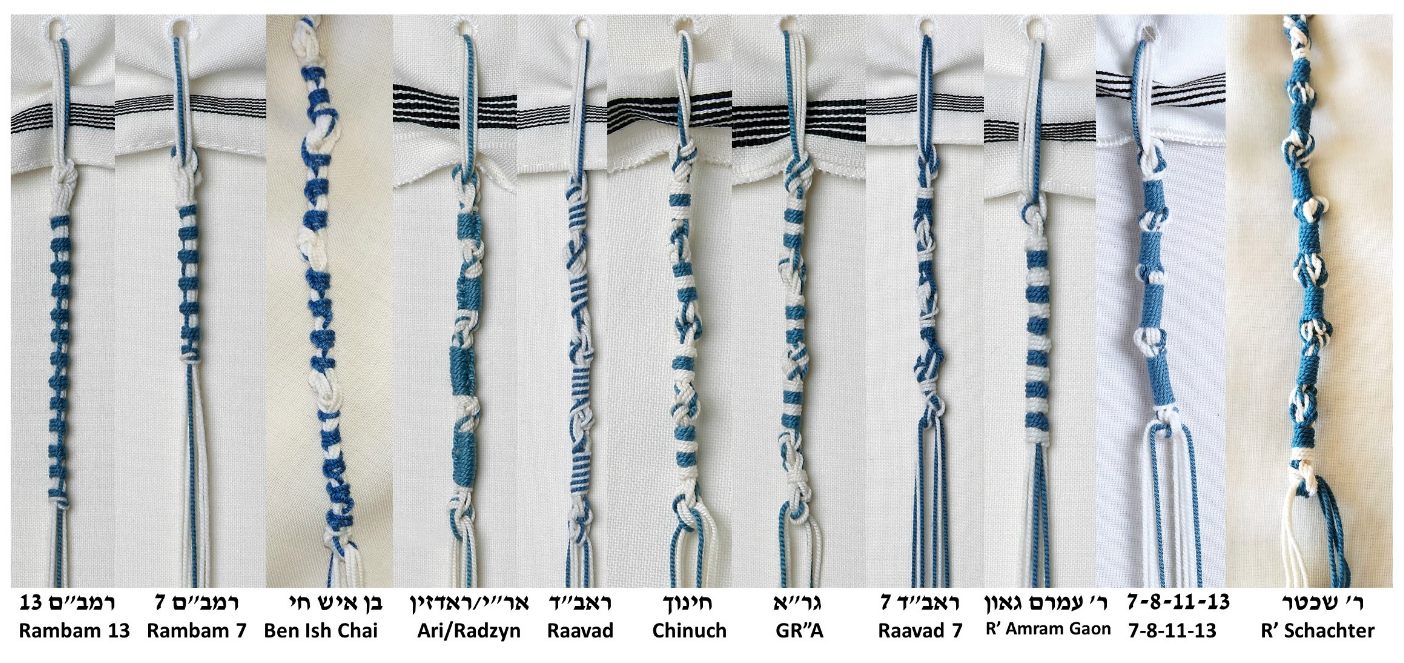
Source:
Numbers Chapter 15 בְּמִדְבַּר
| לח דַּבֵּר אֶל-בְּנֵי יִשְׂרָאֵל, וְאָמַרְתָּ אֲלֵהֶם, וְעָשׂוּ לָהֶם צִיצִת עַל-כַּנְפֵי בִגְדֵיהֶם, לְדֹרֹתָם; וְנָתְנוּ עַל-צִיצִת הַכָּנָף, פְּתִיל תְּכֵלֶת. | 38 ‘Speak unto the children of Israel, and bid them that they make them throughout their generations fringes in the corners of their garments, and that they put with the fringe of each corner a thread of blue. |
| לט וְהָיָה לָכֶם, לְצִיצִת, וּרְאִיתֶם אֹתוֹ וּזְכַרְתֶּם אֶת-כָּל-מִצְוֺת יְהוָה, וַעֲשִׂיתֶם אֹתָם; וְלֹא-תָתוּרוּ אַחֲרֵי לְבַבְכֶם, וְאַחֲרֵי עֵינֵיכֶם, אֲשֶׁר-אַתֶּם זֹנִים, אַחֲרֵיהֶם. | 39 And it shall be unto you for a fringe, that ye may look upon it, and remember all the commandments of the LORD, and do them; and that ye go not about after your own heart and your own eyes, after which ye use to go astray; |
| מ לְמַעַן תִּזְכְּרוּ, וַעֲשִׂיתֶם אֶת-כָּל-מִצְוֺתָי; וִהְיִיתֶם קְדֹשִׁים, לֵאלֹהֵיכֶם. | 40 that ye may remember and do all My commandments, and be holy unto your God. |
| מא אֲנִי יְהוָה אֱלֹהֵיכֶם, אֲשֶׁר הוֹצֵאתִי אֶתְכֶם מֵאֶרֶץ מִצְרַיִם, לִהְיוֹת לָכֶם, לֵאלֹהִים: אֲנִי, יְהוָה אֱלֹהֵיכֶם. {פ} | 41 I am the LORD your God, who brought you out of the land of Egypt, to be your God: I am the LORD your God.’ {P} |
Deuteronomy Chapter 22 דְּבָרִים
| יב גְּדִלִים, תַּעֲשֶׂה-לָּךְ, עַל-אַרְבַּע כַּנְפוֹת כְּסוּתְךָ, אֲשֶׁר תְּכַסֶּה-בָּהּ. {ס} | 12 Thou shalt make thee twisted cords upon the four corners of thy covering, wherewith thou coverest thyself. {S} |
These commandments come closer to the end of the Torah, and perhaps they are an outward sign, like graduating from a Torah school. A police officer wears a badge as a sign he is a police officer. Israel wears teffilin and it means they are children of yah who obey his Torah.
D. Not Mixing Fabrics (Sha’atnez)
Commanded in:
-
Leviticus 19:19 – “You shall not wear a garment of cloth made of two kinds of material.”
-
Deuteronomy 22:11 – “You shall not wear cloth of wool and linen mixed together.”
Purpose & Benefit:
-
Symbol of purity and separation.
-
Avoids blending that represents compromise or corruption.
-
Encourages a lifestyle that is distinct and dedicated.
Sha’atnez teaches believers to separate holy from profane — not only in clothing, but in mindset and values (Ezekiel 44:23).
Modern science has made claims that the vibrational frequency of natural fabrics is good for the human body, while synthetic and blended fabrics are bad for the body.
Fabric Vibrational Frequencies & Human Well‑Being
A 2023 article on The HighWire details research by Dr. Heidi Yellen examining how textiles vibrate and interact with the human body publicmyth.com+15thehighwire.com+15thegooduniverse.com+15:
-
Healthy human bodies resonate at about 100 Hz, matching the frequency of organic cotton.
-
High-frequency fabrics like linen and wool vibrate at approximately 5,000 Hz, promoting vitality and healing.
-
Blending these high‑frequency fabrics (e.g., wearing wool and linen together) reportedly causes their vibrational energies to cancel out, dropping to near zero—resulting in decreased energy and possible bodily stress.
Further articles synthesize this information:
-
Fabrellia, Auréa Curated, and Sparrow Co. affirm that synthetics (polyester, nylon, acrylic) resonate at very low frequencies, often below 15 Hz, which may disrupt the body’s energetic field and reduce vitality reddit.com+12fabrellia.com+12farawear.ca+12reddit.com+8eluxemagazine.com+8twentysevennyc.com+8.
-
Observational user reports (e.g., Reddit) note that wearing high-frequency fabrics like linen correlates with better sleep, mood, and vitality .
Why This Matters for Torah Observance
Biblically, Torah forbids mixing wool and linen (Sha’atnez, Deut 22:11). This aligns with modern findings:
| Fabric Combination | Vibrational Frequency | Effect on Body |
|---|---|---|
| Wool or Linen alone | ~5,000 Hz | Energy-enhancing, associated with vitality |
| Wool + Linen together | ~0 Hz (cancellation) | Energy-draining, neutralizes benefits |
| Organic Cotton | ~100 Hz | Matches healthy body frequency |
| Synthetic Fabrics | ~0–15 Hz | May create energetic stress |
Summary Table: Additional Torah-Based Practices
| Practice | Source | Spiritual Benefit |
|---|---|---|
| Shabbat Lamps | Isaiah 58:13 (tradition) | Honor Shabbat with peace, reverence, and joy |
| Tefillin | Deut. 6:8, Exod. 13:9 | Keep Torah in mind and action; bind Word to life |
| No meat + dairy | Exod. 23:19, Deut. 14:21 | Disciplines daily choices; reflects sanctity and separation |
| No mixed fabrics | Lev. 19:19, Deut. 22:11 | Symbol of spiritual purity; no compromise or mixture |
D. Mezuzah
- A mezuzah (Hebrew: מְזוּזָה, meaning “doorpost”) is a parchment scroll inscribed with specific verses from the Torah, primarily Deuteronomy 6:4–9 and 11:13–21, which include the Shema prayer
Deuteronomy Chapter 6 דְּבָרִים
| א וְזֹאת הַמִּצְוָה, הַחֻקִּים וְהַמִּשְׁפָּטִים, אֲשֶׁר צִוָּה יְהוָה אֱלֹהֵיכֶם, לְלַמֵּד אֶתְכֶם–לַעֲשׂוֹת בָּאָרֶץ, אֲשֶׁר אַתֶּם עֹבְרִים שָׁמָּה לְרִשְׁתָּהּ. | 1 Now this is the commandment, the statutes, and the ordinances, which the LORD your God commanded to teach you, that ye might do them in the land whither ye go over to possess it– |
| ב לְמַעַן תִּירָא אֶת-יְהוָה אֱלֹהֶיךָ, לִשְׁמֹר אֶת-כָּל-חֻקֹּתָיו וּמִצְוֺתָיו אֲשֶׁר אָנֹכִי מְצַוֶּךָ, אַתָּה וּבִנְךָ וּבֶן-בִּנְךָ, כֹּל יְמֵי חַיֶּיךָ–וּלְמַעַן, יַאֲרִכֻן יָמֶיךָ. | 2 that thou mightest fear the LORD thy God, to keep all His statutes and His commandments, which I command thee, thou, and thy son, and thy son’s son, all the days of thy life; and that thy days may be prolonged. |
| ג וְשָׁמַעְתָּ יִשְׂרָאֵל, וְשָׁמַרְתָּ לַעֲשׂוֹת, אֲשֶׁר יִיטַב לְךָ, וַאֲשֶׁר תִּרְבּוּן מְאֹד: כַּאֲשֶׁר דִּבֶּר יְהוָה אֱלֹהֵי אֲבֹתֶיךָ, לָךְ–אֶרֶץ זָבַת חָלָב, וּדְבָשׁ. {פ} | 3 Hear therefore, O Israel, and observe to do it; that it may be well with thee, and that ye may increase mightily, as the LORD, the God of thy fathers, hath promised unto thee–a land flowing with milk and honey. {P} |
| ד שְׁמַע, יִשְׂרָאֵל: יְהוָה אֱלֹהֵינוּ, יְהוָה אֶחָד. | 4 Hear, O Israel: the LORD our God, the LORD is one. |
| ה וְאָהַבְתָּ, אֵת יְהוָה אֱלֹהֶיךָ, בְּכָל-לְבָבְךָ וּבְכָל-נַפְשְׁךָ, וּבְכָל-מְאֹדֶךָ. | 5 And thou shalt love the LORD thy God with all thy heart, and with all thy soul, and with all thy might. |
| ו וְהָיוּ הַדְּבָרִים הָאֵלֶּה, אֲשֶׁר אָנֹכִי מְצַוְּךָ הַיּוֹם–עַל-לְבָבֶךָ. | 6 And these words, which I command thee this day, shall be upon thy heart; |
| ז וְשִׁנַּנְתָּם לְבָנֶיךָ, וְדִבַּרְתָּ בָּם, בְּשִׁבְתְּךָ בְּבֵיתֶךָ וּבְלֶכְתְּךָ בַדֶּרֶךְ, וּבְשָׁכְבְּךָ וּבְקוּמֶךָ. | 7 and thou shalt teach them diligently unto thy children, and shalt talk of them when thou sittest in thy house, and when thou walkest by the way, and when thou liest down, and when thou risest up. |
| ח וּקְשַׁרְתָּם לְאוֹת, עַל-יָדֶךָ; וְהָיוּ לְטֹטָפֹת, בֵּין עֵינֶיךָ. | 8 And thou shalt bind them for a sign upon thy hand, and they shall be for frontlets between thine eyes. |
| ט וּכְתַבְתָּם עַל-מְזֻזוֹת בֵּיתֶךָ, וּבִשְׁעָרֶיךָ. {ס} | 9 And thou shalt write them upon the door-posts of thy house, and upon thy gates. {S} |
| י וְהָיָה כִּי יְבִיאֲךָ יְהוָה אֱלֹהֶיךָ, אֶל-הָאָרֶץ אֲשֶׁר נִשְׁבַּע לַאֲבֹתֶיךָ לְאַבְרָהָם לְיִצְחָק וּלְיַעֲקֹב–לָתֶת לָךְ: עָרִים גְּדֹלֹת וְטֹבֹת, אֲשֶׁר לֹא-בָנִיתָ. | 10 And it shall be, when the LORD thy God shall bring thee into the land which He swore unto thy fathers, to Abraham, to Isaac, and to Jacob, to give thee–great and goodly cities, which thou didst not build, |
| יא וּבָתִּים מְלֵאִים כָּל-טוּב, אֲשֶׁר לֹא-מִלֵּאתָ, וּבֹרֹת חֲצוּבִים אֲשֶׁר לֹא-חָצַבְתָּ, כְּרָמִים וְזֵיתִים אֲשֶׁר לֹא-נָטָעְתָּ; וְאָכַלְתָּ, וְשָׂבָעְתָּ. | 11 and houses full of all good things, which thou didst not fill, and cisterns hewn out, which thou didst not hew, vineyards and olive-trees, which thou didst not plant, and thou shalt eat and be satisfied– |
| יב הִשָּׁמֶר לְךָ, פֶּן-תִּשְׁכַּח אֶת-יְהוָה, אֲשֶׁר הוֹצִיאֲךָ מֵאֶרֶץ מִצְרַיִם, מִבֵּית עֲבָדִים. | 12 then beware lest thou forget the LORD, who brought thee forth out of the land of Egypt, out of the house of bondage. |
| יג אֶת-יְהוָה אֱלֹהֶיךָ תִּירָא, וְאֹתוֹ תַעֲבֹד; וּבִשְׁמוֹ, תִּשָּׁבֵעַ. | 13 Thou shalt fear the LORD thy God; and Him shalt thou serve, and by His name shalt thou swear. |
| יד לֹא תֵלְכוּן, אַחֲרֵי אֱלֹהִים אֲחֵרִים–מֵאֱלֹהֵי, הָעַמִּים, אֲשֶׁר, סְבִיבוֹתֵיכֶם. | 14 Ye shall not go after other gods, of the gods of the peoples that are round about you; |
| טו כִּי אֵל קַנָּא יְהוָה אֱלֹהֶיךָ, בְּקִרְבֶּךָ: פֶּן-יֶחֱרֶה אַף-יְהוָה אֱלֹהֶיךָ, בָּךְ, וְהִשְׁמִידְךָ, מֵעַל פְּנֵי הָאֲדָמָה. {ס} | 15 for a jealous God, even the LORD thy God, is in the midst of thee; lest the anger of the LORD thy God be kindled against thee, and He destroy thee from off the face of the earth. {S} |
| טז לֹא תְנַסּוּ, אֶת-יְהוָה אֱלֹהֵיכֶם, כַּאֲשֶׁר נִסִּיתֶם, בַּמַּסָּה. | 16 Ye shall not try the LORD your God, as ye tried Him in Massah. |
| יז שָׁמוֹר תִּשְׁמְרוּן, אֶת-מִצְוֺת יְהוָה אֱלֹהֵיכֶם, וְעֵדֹתָיו וְחֻקָּיו, אֲשֶׁר צִוָּךְ. | 17 Ye shall diligently keep the commandments of the LORD your God, and His testimonies, and His statutes, which He hath commanded thee. |
| יח וְעָשִׂיתָ הַיָּשָׁר וְהַטּוֹב, בְּעֵינֵי יְהוָה–לְמַעַן, יִיטַב לָךְ, וּבָאתָ וְיָרַשְׁתָּ אֶת-הָאָרֶץ הַטֹּבָה, אֲשֶׁר-נִשְׁבַּע יְהוָה לַאֲבֹתֶיךָ. | 18 And thou shalt do that which is right and good in the sight of the LORD; that it may be well with thee, and that thou mayest go in and possess the good land which the LORD swore unto thy fathers, |
| יט לַהֲדֹף אֶת-כָּל-אֹיְבֶיךָ, מִפָּנֶיךָ, כַּאֲשֶׁר, דִּבֶּר יְהוָה. {ס} | 19 to thrust out all thine enemies from before thee, as the LORD hath spoken. {S} |
| כ כִּי-יִשְׁאָלְךָ בִנְךָ מָחָר, לֵאמֹר: מָה הָעֵדֹת, וְהַחֻקִּים וְהַמִּשְׁפָּטִים, אֲשֶׁר צִוָּה יְהוָה אֱלֹהֵינוּ, אֶתְכֶם. | 20 When thy son asketh thee in time to come, saying: ‘What mean the testimonies, and the statutes, and the ordinances, which the LORD our God hath commanded you? |
| כא וְאָמַרְתָּ לְבִנְךָ, עֲבָדִים הָיִינוּ לְפַרְעֹה בְּמִצְרָיִם; וַיֹּצִיאֵנוּ יְהוָה מִמִּצְרַיִם, בְּיָד חֲזָקָה. | 21 then thou shalt say unto thy son: ‘We were Pharaoh’s bondmen in Egypt; and the LORD brought us out of Egypt with a mighty hand. |
| כב וַיִּתֵּן יְהוָה אוֹתֹת וּמֹפְתִים גְּדֹלִים וְרָעִים בְּמִצְרַיִם, בְּפַרְעֹה וּבְכָל-בֵּיתוֹ–לְעֵינֵינוּ. | 22 And the LORD showed signs and wonders, great and sore, upon Egypt, upon Pharaoh, and upon all his house, before our eyes. |
| כג וְאוֹתָנוּ, הוֹצִיא מִשָּׁם–לְמַעַן, הָבִיא אֹתָנוּ, לָתֶת לָנוּ אֶת-הָאָרֶץ, אֲשֶׁר נִשְׁבַּע לַאֲבֹתֵינוּ. | 23 And He brought us out from thence, that He might bring us in, to give us the land which He swore unto our fathers. |
| כד וַיְצַוֵּנוּ יְהוָה, לַעֲשׂוֹת אֶת-כָּל-הַחֻקִּים הָאֵלֶּה, לְיִרְאָה, אֶת-יְהוָה אֱלֹהֵינוּ–לְטוֹב לָנוּ כָּל-הַיָּמִים, לְחַיֹּתֵנוּ כְּהַיּוֹם הַזֶּה. | 24 And the LORD commanded us to do all these statutes, to fear the LORD our God, for our good always, that He might preserve us alive, as it is at this day. |
| כה וּצְדָקָה, תִּהְיֶה-לָּנוּ: כִּי-נִשְׁמֹר לַעֲשׂוֹת אֶת-כָּל-הַמִּצְוָה הַזֹּאת, לִפְנֵי יְהוָה אֱלֹהֵינוּ–כַּאֲשֶׁר צִוָּנוּ. {ס} | 25 And it shall be righteousness unto us, if we observe to do all this commandment before the LORD our God, as He hath commanded us.’ {S} |
https://mechon-mamre.org
Copilot said


Optional Additions:
- Book Recommendations:
- The Pauline Paradox – 119 Ministries
- Kingdom Portions – TorahFamily.org
- Walk in the Light – TorahResource
Resources Online:
- 119 Ministries
- TorahFamily.org
- Hebrew4Christians
- BibleHub Interlinear & Concordance
Final Goal:
“This is the way, walk in it.” – Isaiah 30:21
Walk in the same covenant path as Abraham, Moses, Yeshua, and the apostles: by faith, in obedience to the commandments of YHWH, with the testimony of Yeshua (Rev 14:12).
Where to learn more about how to keep the Torah?
1. Teaching on Torah Observance
-
Gateway Center for Israel – Offers in‑depth studies on Torah keeping, including the distinction between moral and ceremonial laws, the 613 commandments, and Jewish identity in Messianic faith nehemiaswall.com+4facebook.com+4aroodawakening.tv+4en.wikipedia.org+13centerforisrael.com+13torahresource.com+13.
-
Tim Hegg’s Why We Keep Torah – Answers common questions believers face when beginning Torah observance, covering food laws, Sabbath, festivals, temple sacrifices, and challenging Paul’s statements torahresource.com.
2. Aviv Barley & Biblical New Year
-
Nehemia’s Wall – Explains that the biblical year begins with the first new moon after the barley in Israel reaches Aviv ripeness aroodawakening.tv+4nehemiaswall.com+4maranathamedia.com+4.
-
YRM (Barley & New Moon) – Breaks down the process: check barley, then wait for the crescent moon themessianictorahobserver.org+5yrm.org+5facebook.com+5.
-
Maranatha Media – Confirms that “Abib barley and the new moon” together determine Nisan’s start jewishvoice.org+6maranathamedia.com+6yrm.org+6.
3. Sighting the New Moon & Biblical Calendar
- http://www.campephraim.org/new-moon-in-jerusalem/
Blow the shofar at the new moon –
sound an alarm in Zion!
For it is a statute for Israel,
a rule of the God of Jacob.
See: Psalm 81:3-4 & Joel 2:1Let us be your eyes witnessing
the New Moon in Jerusalem –
sound the alarm andlet your Shofar be heard in Zion
-
RenewedMoon.com (Biblical Calendar FAQ) – Details why the biblical calendar must follow visible new moons (not calculations), beginning days at sunset facebook.com+4renewedmoon.com+4hoshanarabbah.org+4.
-
Jewish Bible Quarterly – Presents observational data (1981–2016) from the Israeli New Moon Society (INMS), showing when Aviv barley was found and new moons observed themessianictorahobserver.org+8jbqnew.jewishbible.org+8facebook.com+8.
4. Online Learning & Tools
-
WebYeshiva.org – An online yeshiva offering live, interactive classes on Torah, Halacha, Tanakh, and more; ideal for deep study en.wikipedia.org.
-
Torah Live – Multimedia-based halachah learning; rabbis teach commandments from Scripture to practical application en.wikipedia.org.
-
Sefaria – A free digital library with Tanakh, Talmud, Mishnah, commentaries—and bilingual features for learners en.wikipedia.org.
✔️ Quick Guide Summary
| Topic | Key Resources |
|---|---|
| Torah Observance | Gateway Center (Torah papers); Why We Keep Torah (Tim Hegg) |
| Aviv Barley + New Moon | Nehemia’s Wall; YRM; Maranatha Media |
| Lunar-Solar Calendar | RenewedMoon.com; Jewish Bible Quarterly data |
| Interactive Study Platforms | WebYeshiva; Torah Live; Sefaria |
Let Torah become your daily walk, not just head knowledge. Shalom!

Scripture Credits
> Scripture quotations marked (ESV) are from the Holy Bible, English Standard Version® (ESV), copyright © 2001 by Crossway, a publishing ministry of Good News Publishers. Used by permission. All rights reserved.
Scripture quotations marked (NASB) are from the New American Standard Bible® (NASB), Copyright © [1995/2020 – match edition year used] by The Lockman Foundation. Used by permission. All rights reserved.
Scripture quotations from the Peshitta Holy Bible Translated (PHBT) are translated by Glenn David Bauscher. Used with written permission from Glenn David Bauscher. I recieved the electronic version from:
